
Fridge Installation
Fridge Installation & Setup Services in Nairobi: What to Expect When You Hire a Professional A new refrigerator…
Read more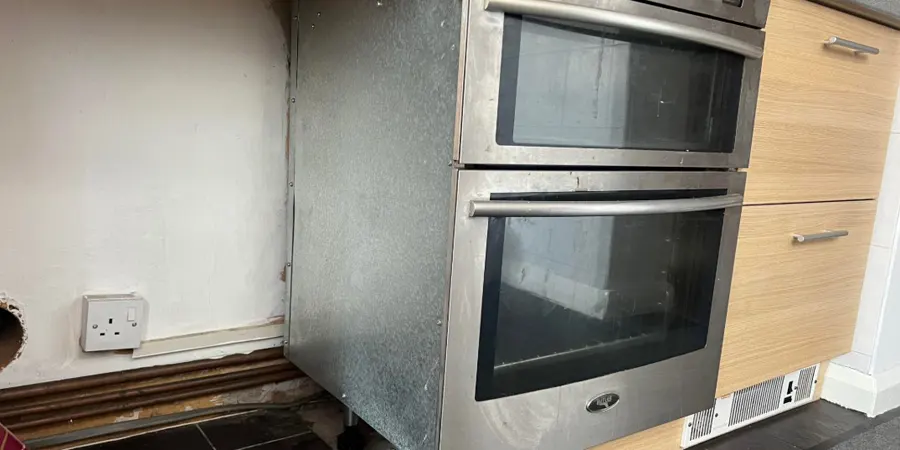
Buying a new oven is an easy decision. Getting it installed correctly is where most homeowners and business owners run into trouble. A gas line fitted at the wrong pressure, an electric oven wired without proper isolation, or a built-in unit forced into cabinetry that wasn't measured for it — any of these can turn a good appliance into a safety hazard or a warranty headache before it's ever used. That is exactly why demand for reliable oven installation services in Nairobi has grown alongside the city's booming appliance market, as more households and restaurants move away from guesswork installs and toward technicians who understand both the appliance and the building it's going into.
Nairobi Repair Center has spent years handling oven installation services in Nairobi for homes, apartments, and commercial kitchens across the city, and the pattern is consistent: a correctly installed oven runs quieter, heats more evenly, and lasts longer than one that was merely "plugged in and left." This article walks through what proper installation actually involves, why it matters more than most buyers realise, and what to expect when you book a technician.
An oven looks simple from the outside — plug it in, connect the gas, slide it into place. In practice, each of those steps carries risks that aren't obvious until something goes wrong. Electric ovens draw significant current and often require a dedicated circuit; connecting one to a shared or undersized circuit can trip breakers repeatedly or, worse, overheat wiring behind the wall. Gas ovens need correctly sized fittings, leak-tested connections, and adequate ventilation, since a poor seal at the regulator or hose can leak invisibly for weeks before it's noticed.
Built-in and under-counter ovens add another layer of difficulty. Cabinetry openings in Nairobi kitchens vary widely in size and depth, and an oven that isn't leveled or secured properly can warp its own door seal over time, leading to heat loss and uneven cooking. This is where professional oven installation services in Nairobi earn their value: a technician checks the cutout dimensions, ventilation clearance, and electrical or gas supply before the unit ever goes into the cabinet, catching problems while they're still easy to fix.
"The number of ovens we're called out to repair within the first month simply because they were installed incorrectly is higher than people expect. A proper install takes an extra thirty minutes and saves months of frustration." — Field technician, Nairobi Repair Center
A complete installation is more than fitting the appliance into its space. It includes verifying the power or gas supply matches the oven's requirements, securing the unit so it can't shift or tip, checking that the door seals and closes evenly, and running a test cycle to confirm even heating before the technician leaves. For built-in models, this also means aligning the oven with adjacent cabinetry and, where relevant, coordinating with a hob or extractor fan installed above it.
Below is a breakdown of the tasks typically carried out during a standard oven installation services in Nairobi appointment.
| Task | What It Involves |
|---|---|
| Site and cutout assessment | Measuring cabinetry space, checking clearance, and confirming ventilation requirements |
| Power or gas supply check | Verifying voltage, circuit capacity, or gas line pressure and fittings match the oven's specifications |
| Electrical connection | Wiring the oven to a dedicated circuit with proper isolation and earthing |
| Gas connection and leak test | Fitting the gas line, tightening connections, and testing for leaks with a soap-water or gas detector check |
| Levelling and securing | Adjusting feet or brackets so the oven sits level and is anchored against tipping |
| Door and seal check | Confirming the door closes flush and the seal has no gaps that would let heat escape |
| Ventilation setup | Ensuring heat and, for gas models, combustion by-products can vent safely |
| Control panel and function test | Testing temperature settings, timers, and any digital display or ignition system |
| Test bake cycle | Running the oven through a heating cycle to confirm even temperature distribution |
| Final safety walkthrough | Reviewing safe operation, cleaning guidance, and warranty terms with the client |
It's tempting to see installation as a formality — something the appliance shop throws in for free or something any handyman can manage in a few minutes. But a rushed install often skips exactly the steps that prevent future problems: the leak test on a gas connection, the level check on an electric range, the clearance measurement around a built-in unit. None of these take long individually, but skipping them is how ovens end up heating unevenly, tripping breakers, or, in rarer but more serious cases, posing a fire or gas-leak risk.
Reliable oven installation services in Nairobi treat the job as a checklist, not a race. That includes confirming the model's specific requirements against the manufacturer's manual, rather than assuming every oven of a given fuel type installs the same way. A budget electric oven and a high-output electric range, for instance, can have very different circuit demands even though they plug into what looks like the same type of outlet.
"People assume every electric oven just needs a wall socket. Some models genuinely need a dedicated circuit, and skipping that step is the most common cause of repeat callouts we see." — Installation lead, Nairobi Repair Center
Gas and electric ovens are installed differently enough that the two shouldn't be treated as interchangeable jobs. Gas installation centers on the supply line — confirming the correct regulator, using approved fittings, and testing every joint for leaks before the appliance is used. Ventilation also matters more here, since gas combustion needs somewhere for exhaust to go, particularly in smaller kitchens or apartments with limited airflow.
Electric ovens shift the focus to the electrical side: circuit capacity, correct earthing, and confirming the oven's rated wattage doesn't overload existing wiring. Built-in electric ovens paired with induction or ceramic hobs sometimes share a single high-capacity circuit, which needs to be sized and wired correctly from the start rather than adjusted after the fact.
Nairobi Repair Center technicians carry the tools and testing equipment for both fuel types, which matters in a city where many kitchens run a mix of gas hobs and electric ovens, or vice versa. Getting the specific requirements of each right — rather than applying a generic install process to every appliance — is what separates a professional job from a guess.
Freestanding ovens are generally simpler: level the unit, connect the supply, and confirm clearance from surrounding surfaces. Built-in ovens, by contrast, need to be measured against the cabinetry opening before delivery, ideally, so there are no surprises on installation day. A cutout that's too tight can force a technician to either modify the cabinetry or the oven fitting itself, neither of which is ideal.
This is a common gap in DIY installs: a homeowner buys a built-in oven based on brand or price, without confirming it will actually fit the existing kitchen unit. Professional oven installation services in Nairobi typically start with a measurement check, either before purchase or before delivery day, to avoid this exact problem.
"We'd rather get a call before the oven is delivered to confirm measurements than get called afterward to fix a cutout that's a centimetre too small." — Nairobi Repair Center technician
Restaurants, cafes, and catering businesses across Nairobi bring an added layer of complexity: higher-capacity ovens, tighter kitchen layouts, and far less tolerance for downtime once the equipment is in use. A commercial oven installed incorrectly doesn't just risk one household's dinner — it can shut down a working kitchen during service hours.
For commercial clients, installation typically includes confirming the electrical or gas supply can handle sustained high-output use, checking ventilation and extraction requirements specific to commercial kitchens, and testing the oven under a realistic load before handing it back to kitchen staff. Nairobi Repair Center has handled installations for both new commercial ovens and replacement units in kitchens that needed to stay operational with minimal disruption.
A good installation doesn't end when the oven is switched on for the first time. Reputable oven installation services in Nairobi include a walkthrough of the appliance's controls, guidance on safe first use, and clear information on what's covered under warranty versus what would count as a separate repair callout. This matters particularly for digital or smart ovens with programmable functions that aren't always intuitive on first use.
Nairobi Repair Center also flags any installation-adjacent issues spotted during setup — an ageing gas line, a circuit that's close to capacity, or cabinetry that may need reinforcement — so clients know about potential problems before they become appliance failures.
"Half of what makes an installation successful happens before we even open the box — checking the space, the supply, and the manufacturer's requirements properly." — Nairobi Repair Center
Whether it's a single freestanding oven for a family kitchen or a full commercial range for a new restaurant, professional installation protects both the appliance and the people using it. Nairobi Repair Center offers oven installation services in Nairobi for gas, electric, built-in, and freestanding ovens across residential and commercial properties, with technicians who test every connection before calling the job complete.
To book an installation or ask about oven compatibility with your existing kitchen setup, contact Nairobi Repair Center at 0746 801 984 (call or WhatsApp) or email info@nairobirepair.co.ke.
Need this sorted today? A technician can be with you the same day, most areas of Nairobi.
Ready when you are
Tell us the brand, the fault and your location — we'll confirm a visit the same day, most areas of Nairobi.
Available 7 days a week · on-site home and business visits